


12 May GIN AND TONIC, WHAT IS ITS ORIGIN?
Gin is one of the most consumed beverages in the world and is both a classic drink and a trend. We’ll tell you about its origin. The versatility of gin is one of its great qualities, making it easy to drink and mix with other ingredients.

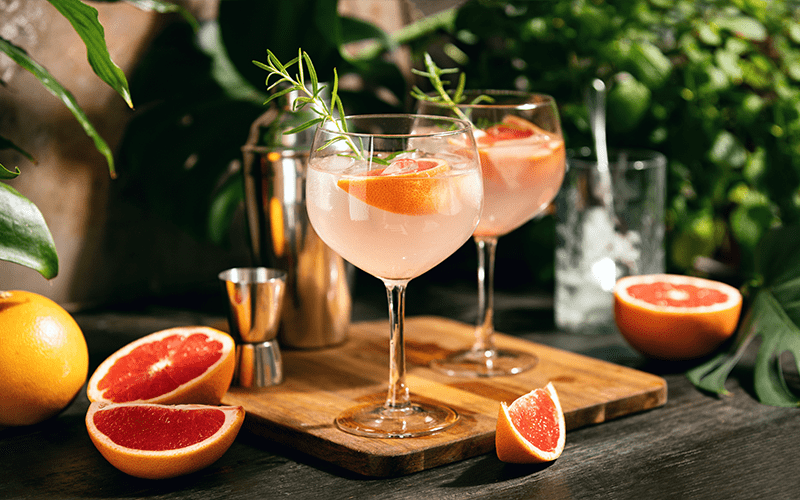
The classic way is with a lemon slice, but there are increasingly more alternatives, such as a lime slice, orange peel, grapefruit, or a sprig of rosemary. The formula for a gin and tonic is: 70/30, meaning 30% gin and 70% tonic water in a glass with plenty of ice. This drink is ideal to order at any bar or enjoy at home with friends.
What is its origin?
There are several stories about the origin of the gin and tonic, but two are the most widely repeated. Both are interconnected: the story of the inventor and entrepreneur Johann Jacob Schweppe, who created tonic water, and that of British soldiers sent to India during the 19th century.
It was in 1811 when Johann Jacob Schweppe invented a system for introducing carbon dioxide bubbles into water packaged in bottles. Later, in 1873, quinine was added to carbonated orange soda to produce Schweppes tonic water.
According to legend, to celebrate the successive victories of British troops in India, a senior British officer proposed adding gin to the tonic.

However, there is another version of the story. It is said that the combination of gin and tonic was born among British soldiers in India due to the properties of quinine in combating malaria. Quinine was used in powder form, obtained from the bark of a tree, for various diseases.

As it is known, the British used it to survive in the tropical colonies of India, and since quinine is bitter, they chose to add soda and sugar, creating the tonic water that Jacob Schweppe registered as Indian Quinine Tonic. Officers took a daily dose to look after their health and began adding gin to the drink. This is how the gin and tonic was born.
















Sorry, the comment form is closed at this time.