


12 Mar Culinary History: The Origin of the Caramel Apple
The caramel apple, an irresistible treat that has been a tradition at fairs and celebrations for generations, has a more recent history than many may think. Although we associate this sweet with childhood and fairs, the caramel apple was created only about 100 years ago by a specialist from New Jersey, USA, who originally designed it as a Christmas decoration. Soon, that decoration transformed into a delicious candy that won over both children and adults, becoming a beloved treat during holidays and events.

The secret behind this popular sweet lies in the process of melting sugar, specifically sucrose, which is extracted from sugarcane or beets. The origins of sugarcane trace back over 5,000 years to New Guinea, but it wasn’t until Alexander the Great’s expeditions in 324 BCE that Europeans encountered it, marveling at its ability to produce honey without bees.

The process of melting sugar at about 170°C is what turns it into caramel. As the sugar heats up, its molecules break down, creating a bitter taste, a strong aroma, and a dark color. If the heat rises too high, around 190°C, the caramel becomes a bitter, inedible syrup.

But how do you make the famous caramel apple? The process is simple: dissolve sugar in water and heat it to 160°C to form caramel. Then, carefully dip the apples into the melted caramel. While there is no specific apple variety ideal for this treat, tart apples are usually recommended.
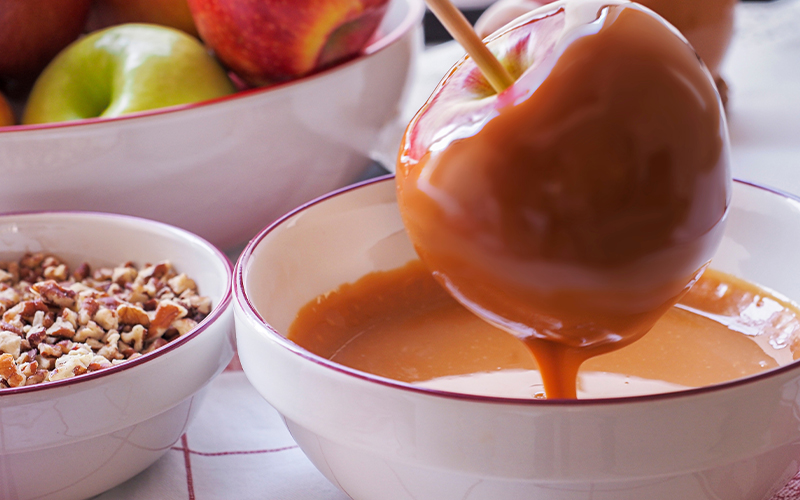
To give it a modern twist, we propose an evolved recipe for caramel apples with cookies. Stick a skewer into the apple, dip it in caramel, and then roll it in chopped cookies. You can also try other toppings like cinnamon oat crunch or ground almonds. An irresistible combination you’ll love!















Sorry, the comment form is closed at this time.